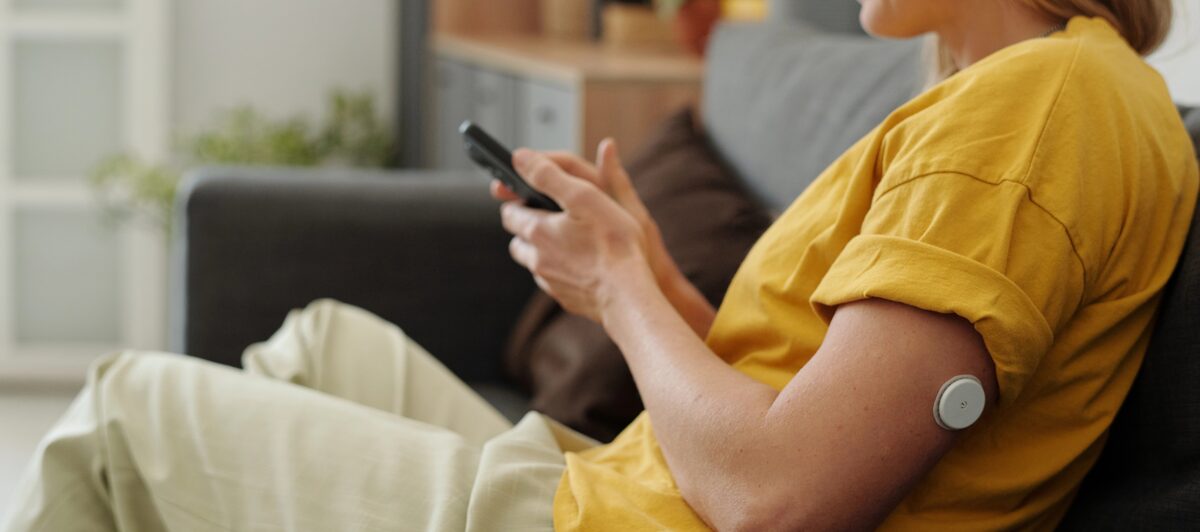
Glucose is the topic where health podcasts argue with each other most openly, which makes it a good one to learn from. Huberman Lab, The Dr. Hyman Show and The Doctor's Kitchen have given long interviews to Casey Means and to Jessie Inchauspé, the "Glucose Goddess", two guests who turned blood sugar spikes into a mainstream worry. Sigma Nutrition Radio, Danny Lennon's evidence-focused show from Ireland, answers with researchers who think most of that worry is overdone. ZOE Science & Nutrition and The Peter Attia Drive fill the space in between with endocrinologists who go deep into the science. We took the five claims that come up most often across these feeds and paired each one with the episode that makes it and the episode that pushes back.
For the hardware itself (rings, bands and the first over-the-counter glucose sensors), see our guide to wearables and health data podcasts. This piece is about what the episodes teach on the science, and where they argue.
Claim: "Glucose spikes are damaging, even if you don't have diabetes"
Who says it. Dr. Casey Means made the case at length on Huberman Lab (May 2024), drawing on her 2024 book on metabolic health: repeated sharp rises in blood sugar strain the mitochondria and drive inflammation. Jessie Inchauspé, the "Glucose Goddess", brought her meal-order tricks to The Dr. Hyman Show (May 2023) and to The Doctor's Kitchen Podcast ("Flatten Your Glucose Levels", April 2022).
The pushback. Sigma Nutrition Radio devoted episode #486, "Blood Glucose Spikes: How High is Too High?" (June 2023), to the question, with researchers Mario Kratz and Nicola Guess. Their point: a rise after a meal is normal physiology, and the evidence that modest spikes harm healthy people is far thinner than the marketing suggests.
How it holds up. Very high or prolonged rises matter. For healthy people, the case that flattening every bump improves long-term outcomes has not been made in trials.
Claim: "Normal blood tests can hide a problem"
This one has better support, and one episode teaches it particularly well. On the ZOE Science & Nutrition episode with Professor Rob Semple (August 2026), the Edinburgh endocrinologist explains how insulin resistance can sit unnoticed for years while fasting glucose still looks normal, because the pancreas compensates by producing more insulin. The episode puts the figure at roughly one in four people.
The Stanford work of Michael Snyder backs part of the sensor argument. His group's 2018 "glucotypes" study fitted continuous monitors to 57 people and found that some participants with normal standard tests spent time in the prediabetic or even diabetic range after certain meals. Snyder explains the deep-profiling approach behind it on FoundMyFitness #064 (May 2021) and returned to the theme on Huberman Lab in September 2025.
Claim: "Insulin resistance is the real root of chronic disease"
For depth, nothing in the category beats The Peter Attia Drive #337 (February 2025), a masterclass with Ralph DeFronzo, whose research shaped how type 2 diabetes is understood. He traces insulin resistance through muscle, liver, fat tissue and the pancreas. It is a demanding listen and the most rewarding one on this list.
The "root of everything" framing stretches further on some shows. The Dr. Hyman Show ran several episodes in 2025 and 2026 on metabolic psychiatry, the idea that conditions such as depression have a metabolic component. The research is real and early, and the episodes present it with more certainty than the trials so far can carry.
Claim: "A sensor will tell you which foods suit you"
ZOE built both its podcast and its business on personal responses to food, and its early research found that people can respond very differently to the same meal. Sigma Nutrition Radio is again the place for caution. In #605, "Fasting, Nutrient Timing & CGMs: Interpreting the Evidence" (May 2026), Professor James Betts of the University of Bath explains why readings vary from day to day for the same food, and how sleep, exercise and the order of a meal all shift the curve. A single reading after a single breakfast tells you less than it seems to.
The Doctor's Kitchen asked the question in its title, "Are Glucose Hacks Worth It?" (June 2023). Dr Rupy Aujla's answer is a qualified yes for vinegar, fiber first and a walk after meals, with the reminder that the overall diet matters far more.
Claim: "Everyone should wear one for a few weeks"
This is the claim with the least support. Clinicians across these shows agree that monitors are valuable for people with diabetes and useful for some people with prediabetes or a strong family history. For everyone else, the useful version is short and specific: wear one for two weeks, answer one question (does my usual lunch send me high?), then stop. The less useful version is open-ended scoring that turns a normal meal into a worry. If that sounds familiar, our list of podcasts for anxiety covers health worry in more depth.
The over-the-counter sensors these shows discuss
Since 2024, two-week sensors have been sold in the US without a prescription to adults who do not use insulin, paired with a phone app that charts readings and logs meals. They are not built to warn of dangerous lows, and their apps grade meals in ways that standard medical guidance does not. Before buying one, check whether the subscription renews automatically, how you can export the data for your doctor, and what the app does with your information.
Three episodes to start with
Begin with DeFronzo on The Peter Attia Drive for the biology, then Rob Semple on ZOE for the hidden-insulin-resistance argument, then Kratz and Guess on Sigma Nutrition Radio as the skeptical check. Together they take about five hours and cover the whole debate. For the food side, our guide to nutrition podcasts for beginners lists shows that keep the advice simple.
Last updated: 16 November 2026.
This article is for general information and is not medical advice. If you have diabetes, prediabetes or symptoms of high or low blood sugar, talk to your doctor before changing your treatment or diet.