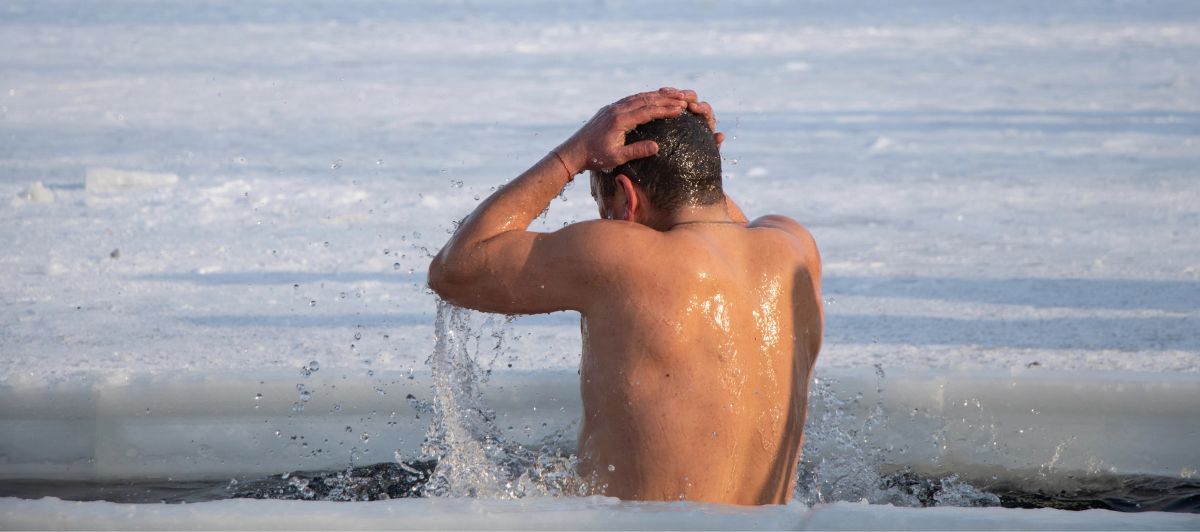
No health trend owes podcasting more than deliberate cold and heat. Ice baths went from athlete eccentricity to suburban backyard fixture largely on the strength of a few hugely popular episodes, and saunas followed the same pipeline from Finnish tradition to biohacker essential. Here is who built the trend, which episodes did it, what the evidence supports, and where the real debates sit.
How a freezer full of water ended up next door
Wim Hof spent a decade making cold exposure charismatic. Then Huberman Lab translated it into protocols, and protocols sell equipment. His deliberate cold exposure episode popularized the work of Copenhagen researcher Susanna Søberg, whose 2021 study of Danish winter swimmers produced the numbers the industry now quotes: about 11 minutes of cold water and 57 minutes of sauna per week. Those figures describe the habits of eight experienced swimmers in the study, compared with eight controls; nobody tested them as a dose. Søberg's advice to end on cold and let the body reheat itself, which Huberman dubbed the "Søberg principle", spread just as fast. Plunge tubs became a product category with podcast sponsorships. Sauna ran a parallel track on better evidence, powered largely by one researcher's data and one podcaster's enthusiasm.
The shows that built the trend
Huberman Lab and the cold
The cold coverage on Huberman Lab is the proximate cause of the plunge industry. It combined the catecholamine data (small studies show a large, lasting rise in noradrenaline and dopamine after immersion, the likely source of the post-plunge lift), brown fat, the Søberg numbers and a protocol that turned a sensation into a regimen. He also supplied the trend's main caveat. Cold immersion in the hours right after strength training appears to blunt muscle and strength gains: in a 12-week trial published in the Journal of Physiology in 2015, 21 men who took a 10-minute cold bath after each session gained less strength and muscle than those who did an active cool-down. So lifters are told to keep plunging well away from training, or to plunge first.
FoundMyFitness and the heat
On FoundMyFitness Rhonda Patrick interviewed Dr. Jari Laukkanen, the Finnish cardiologist behind a cohort of 2,315 middle-aged men from eastern Finland followed for a median of about 20 years, and put his findings into circulation. In the 2015 JAMA Internal Medicine paper, men using saunas four to seven times weekly had roughly half the fatal cardiovascular disease risk of once-a-week users, with similar associations for sudden cardiac death and all-cause mortality. Later analyses of the same men added intriguing signals on dementia. Her episodes on heat shock proteins and the exercise-like effects of heat supplied the biological story, and most sauna marketing that cites research traces back to her show.
The Peter Attia Drive and the sense of proportion
On The Peter Attia Drive, Attia plays his usual role, sympathetic and disciplined. He finds the sauna data interesting but reminds listeners that a cohort of sauna-loving Finns is observational: sauna use travels with social connection, relaxation and culture, all of which predict health on their own. He is more reserved about cold plunges, treating the mood effect as real and the metabolic claims as speculative. He keeps both in proportion to the recovery tools that matter most, sleep and training (our guide to the best sleep podcasts covers the first of those).
Science Vs and the reality check
The ice-bath segment of Science Vs in its 2023 episode "Self-Care: Can You Hack Your Mood?" walks through what cold water does to the body, asks whether the evidence on depression holds up (it rests on small trials), and covers the real risks of cold-water shock. It is worth one listen before you buy a chest freezer. For the wider argument over which self-experiments hold up, see our look at biohacking podcasts and the science behind them.
What the evidence supports, claim by claim
| Claim | Evidence | Who says it |
|---|---|---|
| Cold water lifts mood and alertness for hours | Consistent in small studies; large noradrenaline and dopamine rises after immersion | Huberman, Science Vs |
| Cold water eases soreness after exercise | Modest effect on perceived soreness; better for how you feel than for performance | Most of these shows |
| Plunging right after lifting reduces gains | One well-designed 12-week trial (Roberts 2015) plus supporting biopsy data; the effect seems specific to strength work | Huberman |
| Cold boosts metabolism through brown fat | Small studies, including Søberg 2021; plausible mechanism, unproven effect on weight | Huberman; Attia skeptical |
| Cold strengthens immunity or treats depression | Thin: small trials and self-selected volunteers | Science Vs on depression; Attia |
| Frequent sauna use is linked to lower cardiovascular death | Strong association in the Finnish cohort (Laukkanen 2015); observational, so cause is unproven | Patrick; Attia adds the caveat |
| Sauna lowers blood pressure and improves wellbeing | Decent short-term trial evidence; plausible mechanisms | Patrick |
| Heat and alcohol are a dangerous mix | Well documented in Finnish safety data; dehydration adds risk | Every credible episode |
The cold dose is smaller than the suffering implies: Søberg's 11 minutes is a weekly total spread across several short dips. And the effect sizes for both practices are modest next to sleep, training and drinking little alcohol. The credible hosts treat cold and heat as extras on top of those basics.
Home plunge tubs and sauna types: what you are buying
Plunge and sauna brands are familiar podcast sponsors, and the products vary widely. At the simple end are tubs or barrels you fill with ice. Chilled tubs add a chiller unit that keeps the water cold, usually with filtration and sanitation, and they need a suitable power supply. Converted chest freezers are the cheapest route and the riskiest, because water and mains power together need careful wiring and a protected outlet. Saunas split into traditional and infrared. A traditional Finnish sauna heats the air with an electric or wood-fired stove, and water thrown on the stones adds humidity. An infrared cabin warms the body with panels at a lower air temperature. The Finnish cohort behind the heart data used traditional saunas, so infrared results cannot be assumed to match. Before buying either, check the electrical needs, the cleaning routine, the space and noise, the warranty, and how often you will use it.
A 30-day experiment, with a listening plan
To test this on yourself, give it a month and pair each week with one episode. Week one: Huberman's cold exposure episode, then two or three short cold showers or dips, noting mood and alertness afterwards. Week two: Patrick's interview with Laukkanen and Huberman's heat episode, adding sauna sessions if you have access, with water on hand and no alcohol. Week three: an Attia episode for proportion, and a check that the new habit has cost you neither sleep nor training sessions. If you lift, move any plunge well away from strength work. Week four: the Science Vs episode, then read back your notes and decide what stays. Four to five hours of listening costs far less than a tub. Anyone with a heart condition or high blood pressure should talk to a doctor before starting either practice.
The shows in this guide appear in Reason.fm's Health & Fitness, Fitness and Alternative Health charts.
This article looks at how podcasts discuss the topic and is not medical advice. Talk to a doctor or other qualified clinician about your own situation before starting, changing or stopping any treatment.